

Scar care
Guide: Scar care
How scars form, when you can start caring for them and what matters after surgery and a caesarean section.

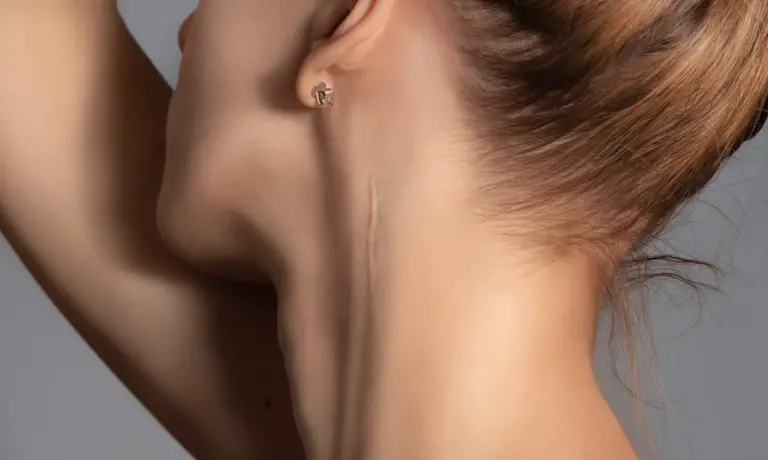


Scar care at a glance
A scar is not finished once the wound has closed: beneath the skin, the tissue keeps reorganising itself for many months. It usually takes 12 to 18 months for a scar to mature. During this time you can do a lot to keep the skin over the scar supple and well cared for. Dr. Mariam Omar, specialist in plastic and aesthetic surgery, explains what matters in our guide.
When can you start caring for a scar?
Only once the wound has fully closed: the wound edges lie smoothly together, nothing weeps or bleeds any more, there is no scab left, and stitches or staples have been removed. Until then, creams, oils or ointments do not belong on the wound – keep it clean and dry and follow your hospital’s instructions. Whether the wound has closed is for your doctor to judge; their advice is what counts.
The basics of scar care
- Moisturise: Regular care keeps the skin over the scar supple.
- Massage: Gentle massage keeps the tissue flexible. It should not hurt.
- Protect from the sun: With clothing or a high sun protection factor until the scar has matured.
- Don’t cool it or use a hot-water bottle: The scar needs good blood circulation.
- Patience: Changes show over months, not days.
Read more in Scar care: 7 tips for fresh and older scars.
Scar care after surgery
Depending on the procedure, the scar is in a different place – and everyday life raises different questions:
- Caring for your caesarean scar: when to apply cream and massage, and why you should not cool it
- Scar care after breast surgery: when to apply cream and massage – and which bra is right for now
- Scar care after abdominal surgery and a tummy tuck: caring for large scar areas calmly and regularly
How scars heal
From the first days of wound healing to the mature scar: Scar healing: stages, duration and care explains what happens in each phase, how long a stitched wound takes to heal and which types of scars there are.
When should you have the scar checked?
Increasing redness, warmth, weeping or fever need medical attention right away. Some people are prone to raised scars or keloids: if a scar stays red, raised or sunken despite good care, get advice from a specialist practice.
Care for closed scars
Scar Rescue Cream is a silicone-free scar cream for the daily care of fully closed scars – after surgery, a caesarean section or breast surgery, on the face and body. It was developed by Dr. Mariam Omar.

